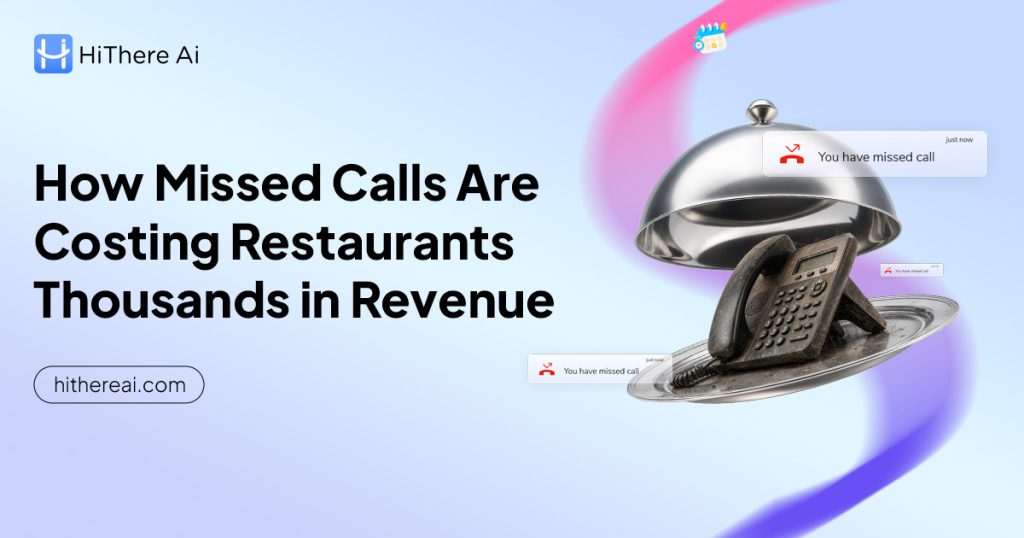
In Australian restaurants, every missed call is a lost booking opportunity already in progress. During peak service hours and after hours periods, even a 2–3 minute delay in response can determine whether a table is filled or permanently lost to a competitor.
This is where missed calls restaurant revenue becomes a critical issue. Demand is not the problem. The real issue is response speed, and in most cases, the booking is secured by the next restaurant that answers first.
Why Missed Calls Directly Cost Restaurants Revenue
In the restaurant industry, phone calls are rarely casual enquiries. Most incoming calls are driven by intent to book a table, confirm availability, or make group reservations.
This is why missed calls restaurant revenue is a critical metric for hospitality operators. Even a small number of unanswered calls each day can translate into meaningful financial loss.
To put this into perspective using conservative Australian market assumptions:
- Average spend per booking: AUD $120 to $300 per table (casual dining to mid-range venues)
- Missed booking intent calls per day: 3 to 5 calls in busy service periods
- Realistic conversion rate when answered: 15% to 30% (not every call converts)
- Resulting lost revenue: approximately AUD $540 to $1,500 per day potential upside depending on venue type and demand
Even at the lower end of this range, the impact compounds quickly:
- AUD $500 to $1,000 per day in missed opportunity
- AUD $15,000 to $30,000 per month in potential revenue leakage
The core issue is not demand. It is response speed and booking capture failure
How Missed Calls Turn Into Lost Bookings and Unfilled Tables
Every missed call represents a missed opportunity to convert intent into a confirmed booking.
In many cases, missed bookings restaurant scenarios occur during peak demand periods when staff are already fully engaged with dine-in service. Without immediate response, customers do not wait. They simply move on to alternative venues.
This creates a clear chain of revenue loss:
- Incoming booking intent
- No immediate response
- Customer shifts to a competitor
- Table remains unfilled
Over time, this results in consistent underutilisation of peak seating capacity, particularly during high demand service periods where every table turnover matters.
Why Restaurants Struggle to Answer Calls During Peak Service Hours
Most restaurants operate with frontline staff prioritising in venue customer experience. During peak service hours, answering phones becomes secondary to table service and operational flow.
This is where a restaurant call answering service becomes relevant in operational discussions.
The challenge is structural:
- Staff are fully engaged in customer service and order management
- Phones ring unpredictably during peak dining periods
- There is no dedicated system for real time booking capture
As a result, calls are often delayed, missed, or answered under pressure, which significantly reduces the likelihood of converting enquiries into confirmed bookings.
The Hidden Revenue Loss from Unanswered Calls and After Hours Enquiries
A significant portion of lost revenue occurs outside standard operating visibility. After hours restaurant calls often represent high intent booking attempts for the next service period or peak weekend reservations.
Using realistic Australian hospitality benchmarks:
- Average table value: AUD $300 to $600, depending on venue type
- Conversion rate of phone enquiries when answered promptly: 10% to 40%
- Missed call volume in busy venues: 3 to 8 calls per day
When applied consistently, these figures show how missed calls restaurant revenue loss can accumulate quickly, often without immediate operational visibility.
The key issue is that these losses are not tracked in real time. As a result, restaurant operators often only notice the impact when consistent occupancy gaps or reduced peak-service bookings become visible over time.
See what missed calls could be costing your restaurant in real revenue using your own booking volume and average spend.
👉 Calculate your potential revenue loss
Why Customers Don’t Wait and Book the Next Available Restaurant Instead
Modern dining behaviour is highly responsive and convenience driven. When customers make a booking decision, they expect immediate confirmation or a timely response.
If a call is not answered, restaurant reservation missed calls often result in instant competitor switching.
This behaviour is driven by:
- High availability of alternative dining options
- Low switching cost for customers
- Immediate intent to secure a table
In practice, response speed is no longer just a service metric. It has become a direct competitive advantage that influences which restaurant secures the booking.
Why Traditional Voicemail and Manual Booking Systems Fail Restaurants
Many restaurants still rely on voicemail or manual callback processes to manage missed calls. While these systems may seem like a fallback solution, they introduce critical delays into a process that is fundamentally time sensitive and intent driven.
An automated phone answering restaurant system is becoming increasingly relevant because traditional approaches fail to align with how modern customers make booking decisions in real time.
Traditional systems vs HiThere AI
| Aspect | Voicemail / Manual Callback | HiThere AI |
|---|---|---|
| Booking capture timing | After the call, delayed response | At the moment of customer intent |
| Customer availability | Often lost by callback time | Captured instantly during enquiry |
| Staff dependency | Requires manual follow-up | No staff intervention needed |
| Peak hour performance | High risk of missed calls | Continuous coverage during service |
| Conversion likelihood | Lower due to delay | Higher due to instant response |
Voicemail based systems often result in lost interest by the time follow-up occurs, especially for same day bookings.
In hospitality environments where demand is immediate and competitive, delay is not neutral. It directly reduces the likelihood of converting intent into confirmed reservations.
How HiThere AI Helps Restaurants Capture Every Call with AI Booking Assistant Technology
HiThere AI sits between customers and restaurant booking systems to ensure high intent booking enquiries are captured at the exact moment they happen, not after the opportunity is lost.
In restaurants, calls come in during peak service hours, after hours, and outside staff availability. Without real time response, these enquiries often turn into lost bookings.
HiThere AI solves this by operating 24/7, 365 days a year, ensuring every call is answered instantly, regardless of time or workload.
Using AI phone answering for restaurant capabilities, it provides continuous call coverage during:
- Peak service hours
- After hours booking enquiries
- High volume dining periods
With an AI booking assistant restaurant function, HiThere AI:
- Captures booking intent in real time
- Converts calls into structured reservation data instantly
- Ensures every call is answered 24/7 without exception
- Reduces reliance on front of house availability
- Keeps booking flow consistent during service peaks
The outcome is simple: fewer missed calls and more confirmed reservations.
Every answered call protects revenue that would otherwise be lost due to timing, staffing constraints, or service pressure.
Unlike traditional systems limited by operating hours, HiThere AI ensures restaurants maintain always on booking capture without disrupting in venue service quality.
Why Restaurants Are Moving Toward AI Powered Call and Booking Systems
The shift toward automation in hospitality is driven by operational necessity rather than trend adoption.
An AI phone answering for restaurant system allows venues to maintain consistent response levels regardless of staffing pressure, service intensity, or after hours demand.
Restaurants are increasingly adopting AI based systems to:
- Improve booking conversion rates
- Reduce reliance on manual phone handling
- Maintain responsiveness during peak demand periods
- Protect revenue from missed booking enquiries
This shift reflects a broader move toward automation in restaurant call handling, where response speed directly influences booking outcomes and overall revenue performance.
Recommended Reads: What Missed Calls Are Really Costing Small Businesses in Australia
Final Thought
Restaurants are not losing demand, and they are not facing a shortage of customer interest. The real challenge lies in operational response speed at the exact moment booking intent is created.
Every missed call is not just a missed enquiry. It is a real time decision where a customer chooses another restaurant because the first option did not respond fast enough.
In this environment, revenue is no longer determined only by food quality, location, or marketing. It is increasingly determined by how consistently a restaurant can capture and convert incoming booking intent.
HiThere AI exists to close this gap by ensuring every call is answered, every booking opportunity is captured, and no revenue is lost simply because the timing was wrong.
The difference between a full table and an empty one is often just a few unanswered rings.

Frequently Asked Questions
An AI phone answering service for restaurants is a system that automatically answers incoming calls, captures booking intent, and records reservation details in real time. HiThere AI acts as an always on layer between customers and the restaurant, ensuring no booking enquiry is missed during peak hours or after hours periods.
Missed calls directly translate into lost reservations. When customers cannot reach a restaurant, they typically call the next available venue instead. With HiThere AI, every call is answered instantly, helping restaurants protect missed calls restaurant revenue and convert more enquiries into confirmed bookings.
Yes. AI booking assistants like HiThere AI can capture reservation details during the call, structure the information, and ensure booking intent is recorded immediately. This reduces reliance on staff availability and helps restaurants secure bookings even during peak service periods.
When calls go unanswered, customers rarely wait. Most will move on to a competitor within minutes, especially for same-day or peak dining bookings. HiThere AI eliminates this risk by ensuring every call is answered instantly, even during service rush or after hours.
A traditional receptionist depends on availability and working hours, which creates gaps during peak service or outside operating times. HiThere AI operates continuously, 24/7, capturing every call without interruption. This ensures consistent booking conversion without adding pressure on front of house staff.