
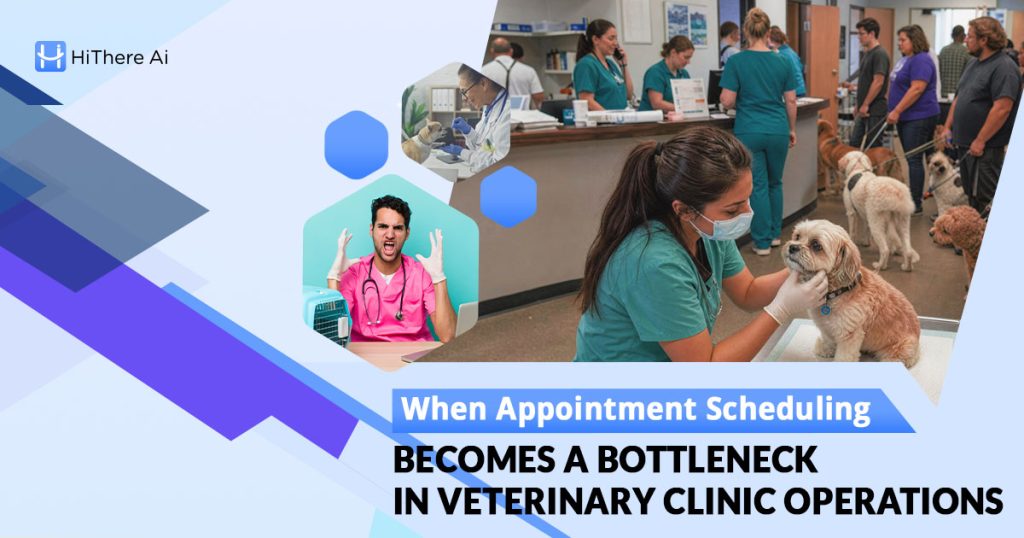
In veterinary clinics across Australia and New Zealand, inefficiencies in vet appointment booking reduce daily appointment capacity by 10 to 20% and result in an estimated AUD $5,000 to $20,000 in monthly revenue loss for a mid sized clinic.
This is not a demand issue in either market. This is a systems issue in how clinics manage vet appointment booking across fragmented tools such as phone based enquiries, manual diaries, and disconnected scheduling software, which creates delays, inconsistencies, and avoidable gaps in clinic capacity.
For clinics operating under constant pressure from emergency cases, seasonal demand spikes, and workforce constraints, this results in slower booking responses, unpredictable daily scheduling flow, and reduced operational stability across the entire practice.
How Inefficient Vet Appointment Booking Leads to Lost Capacity and Operational Strain
In veterinary clinics, inefficiencies in vet appointment booking reduce capacity and disrupt daily workflow consistency. When bookings are delayed, duplicated, or re-entered across disconnected systems, clinics lose real time visibility over availability, creating fragmented scheduling and unused capacity.
A 10 to 12% scheduling inefficiency is enough to impact mid to high volume clinics, typically resulting in AUD $3,000 to $8,000 in lost revenue per month, depending on consultation volume and service mix.
This typically appears as:
- Unfilled appointment slots during peak demand periods
- Manual rework across scheduling systems
- Reduced patient throughput during high demand hours
- Increased administrative workload on reception teams
- Disrupted clinic flow and resource allocation
Why Veterinary Clinic Appointment Scheduling Breaks Down Across Multiple Systems
Veterinary clinic appointment scheduling is often spread across multiple disconnected systems, including phone calls, online booking forms, email enquiries, and internal spreadsheets. This fragmentation slows response times and increases the risk of human error.
When information is not centralised, clinics commonly experience:
- Duplicate bookings across different channels
- Missed or unconfirmed appointments
- Incomplete or inconsistent client records
- Reduced visibility over real time scheduling capacity
These issues become more pronounced during peak demand periods such as seasonal illness spikes or emergency surges.
From an operational perspective, fragmentation reduces scheduling visibility, making it harder to maintain consistent workflow control across the clinic.
For clinics looking to improve operational efficiency, learn more about AI driven solutions for veterinary practices on the veterinary clinic automation system by HiThere AI.
The Limitations of Vet Clinic Scheduling Systems in Managing Real Time Demand
Many vet clinic scheduling systems are not designed for real time operational complexity. They perform adequately under normal conditions but struggle when demand fluctuates rapidly or emergency cases disrupt planned schedules.
This creates scheduling bottlenecks where routine appointments are delayed or reshuffled without system wide coordination. Clinics are often forced into manual workarounds, increasing administrative workload and reducing overall staff efficiency.
In practice, reception teams spend a disproportionate amount of time resolving scheduling conflicts rather than focusing on client communication and daily operational flow.
The Cost of Inefficient Veterinary Appointment Management on Clinic Performance
Inefficiencies in veterinary appointment management create operational costs that extend beyond scheduling. When systems lack structure, clinics in Australia and New Zealand face higher administrative workload, lower patient throughput, and increasing staff fatigue.
Across service based healthcare environments in AU/NZ, administrative tasks typically consume 20 to 30% of staff time. In veterinary clinics, this results in slower service delivery and reduced availability for urgent cases.
The impact is usually seen in three areas:
- More time spent on administrative tasks instead of clinical support
- Reduced number of patients processed per day
- Increased pressure on reception and coordination staff
Moving From Manual Scheduling to Automated Vet Appointment Booking with HiThere AI
Across veterinary clinics in Australia and New Zealand, the shift toward automated vet appointment booking is being driven by a clear operational constraint: manual scheduling systems can no longer keep pace with multi channel enquiries, emergency cases, and fluctuating daily demand.
Most clinics still operate using phone calls, diaries, and disconnected tools. This leads to delays in booking confirmation, duplicate entries, and gaps in scheduling that directly disrupt daily clinic flow.
HiThere AI addresses this by acting as an operational automation layer that centralises appointment handling into a single structured workflow. Instead of managing bookings across disconnected channels, clinics process appointments in real time based on availability, urgency, and capacity.
This makes vet appointment booking more consistent, predictable, and easier to manage during peak periods and emergency surges.
What HiThere AI improves in daily clinic operations:
- Captures appointment requests instantly across all channels
- Reduces booking confirmation delays and follow-up gaps
- Eliminates duplicate entries and manual scheduling errors
- Prioritises urgent and emergency appointments in real time
- Aligns bookings with live clinic capacity and availability
- Reduces administrative load on reception teams
- Improves visibility of the daily clinic schedule
HiThere AI supports clinics as an AI booking assistant for vet clinics, ensuring enquiries are captured and actioned immediately. At the same time, it operates as an AI scheduling assistant for veterinary clinics, structuring appointments into a coordinated flow aligned with operational priorities and clinic capacity.
Together, this creates a more stable scheduling environment for veterinary clinics across Australia and New Zealand, where operations become less reactive and more structured.
Scaling Veterinary Operations with Vet Clinic Workflow Automation and AI Scheduling Systems
At a system level, vet clinic workflow automation enables veterinary clinics across Australia and New Zealand to shift from reactive scheduling to structured operational control. This improves appointment accuracy, clinic efficiency, resource allocation, and service continuity.
HiThere AI supports this by unifying scheduling, coordination, and workflow management into a single operational layer. Appointment data is processed in real time and aligned with clinic capacity, reducing manual coordination and improving decision making speed.
As a result, clinics using AI driven systems such as HiThere AI achieve more stable scheduling, lower administrative load, and more predictable operational cycles. The AI appointment booking vet clinic model helps match demand with available capacity, reducing both underutilisation and scheduling bottlenecks.
Explore More Insights:
What Happens When Your Business Can’t Answer the Phone During Busy Hours?
Final Operational Insight
Veterinary clinic scheduling inefficiencies are system level problems, not isolated administrative issues. They directly impact capacity, workflow stability, and coordination across the entire clinic environment.
Shifting from manual scheduling to AI driven automation systems such as HiThere AI improves operational consistency at scale, resulting in more predictable workflows, better resource utilisation, and better operational control.
Book a demo with HiThere AI to explore how veterinary clinics can transition from fragmented scheduling systems to a unified AI driven operational workflow.
Frequently Asked Questions
Scheduling bottlenecks in veterinary clinics are usually caused by fragmented systems such as phone bookings, manual diaries, and disconnected software tools. This leads to delays, duplicate entries, and reduced visibility over real time clinic capacity, especially during peak demand or emergency cases.
Inefficient vet appointment booking can result in 10–20% of daily capacity being underutilised. For a mid sized veterinary clinic in Australia or New Zealand, this can translate into approximately AUD $5,000 to $20,000 in monthly lost revenue, depending on service volume and appointment mix.
Veterinary clinic appointment scheduling becomes difficult in real time because most systems are not designed for dynamic demand. Emergency cases, cancellations, and walk-ins can quickly disrupt planned schedules, forcing staff to manually adjust bookings throughout the day.
Automation improves veterinary appointment management by centralising bookings into a single system, reducing manual coordination, and ensuring appointments are allocated based on real time availability and urgency. This improves scheduling accuracy and reduces administrative workload.
HiThere AI acts as an operational automation layer that supports automated vet appointment booking and structured scheduling workflows. It helps clinics manage incoming enquiries, prioritise urgent cases, and maintain consistent daily scheduling across Australia and New Zealand veterinary operations.